Showing 129–144 of 221 results
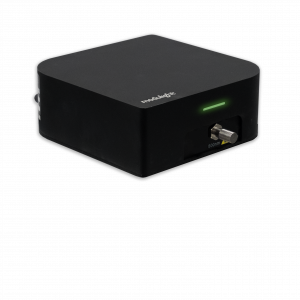
ML6600 – high-power laser system with multi-wavelength support
Bernard Azout

Key features:
ML6600 laser system has 1-3 receptacle laser outputs. The control, cooling and driver are integrated, and the control supports both analog and digital modes.
• Wavelengths: 400–2000 nm
• Power range: up to 120 W, depending on the wavelength
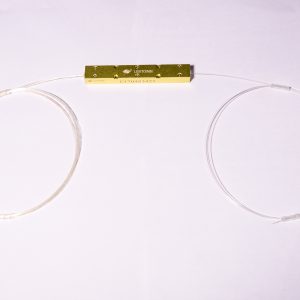
Mode Fiels Adaptator (MFA)
Lea Guez

Key Features:
- High Signal Transfer Efficiency
- Low Degradation of Beam Quality
- High Power Operation (Forward version)
- Wide Wavelength Range Applicable
- Customized Configurations Available
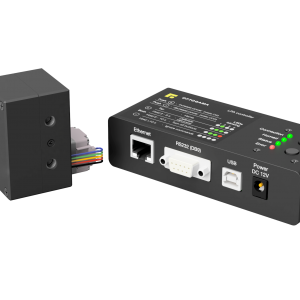
Motorized polarization rotators MRO
Michael ILUZ

Main features:
- Compact design
- High resolution – 175543 μsteps in 360 deg rotation
- High accuracy – ±10 μsteps (± 0,02 deg)
- Clear aperture – 18 mm
- Fast adjustment – less than 0,2 sec (0 to 45 deg)
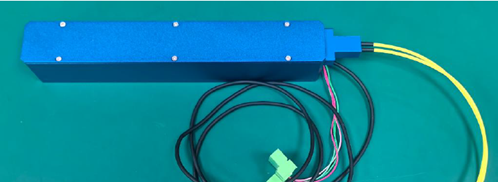
Motorized Variable Optical Delay Line
Lea Guez
Key Features
- Motorized adjustable optical delay
- Low insertion loss (≤ 1.5 dB)
- High extinction ratio (≥ 18 dB @ PM fiber)
- Low PDL (≤ 0.1 dB)
- Compact and robust design
- Customizable delay range, wavelength, fiber type, and connectors
Typical Applications
- OCT (Optical Coherence Tomography) systems
- Fiber optic component testing
- Medical treatment and diagnostic systems
- Optical sensing and measurement setups
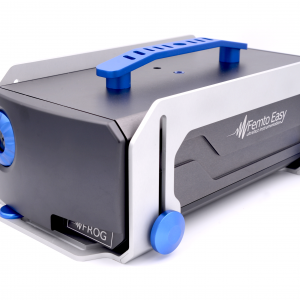
MS-FROG
Michael Iluz
Key Features:
- User-friendly: no calibration and no tweaking necessary
- Versatile: instant-swap of spectrometer for different wavelength ranges
- Large pulse duration measurement range (from 5 fs to 80 ps)
- High sensitivity (sub-nJ pulse)
- User-friendly and powerful software (STAR : Software Technology for Acquisition and Retrieval)
- Broad available spectral range
- Fiber connector available (FC/APC, FC/PC)
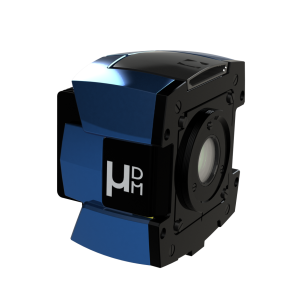
mu-DM: Deformable mirror for microscopy & ophthalmology
Miki Iluz

Features of µDM deformable mirror for microscopy
- Fast closed-loop convergence and accurate sensorless correction with perfect linearity and absence of hysteresis
- Preserved photon budget with achromatic, highly reflective and continuous membrane
- Long-term stability with temporal drift automatic compensation
- Large dynamic range with 50% of actuators stroke still available while generating 40 microns PtV of focus
- Fine timing control with trigger-in and trigger-out features
- Easy integration with electronics embedded in a single-piece design and connection via a USB3 cable
- Correction up to 10th Zernike order thanks to optimized actuator layout
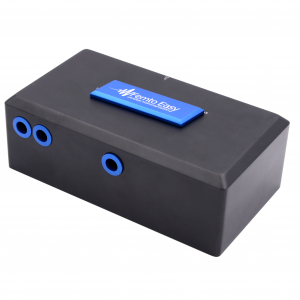
NANO4TH FREQUENCY CONVERTER
Michael Iluz
Key Features:
- Ultra compact, industrial-grade platform : sealed, nitrogen purged
- High conversion efficiency of low-energy pulses (nJ level)
- Wavelength change from 3 outputs, within seconds : fundamental, 2nd and 4th harmonics
- All-in-one design. Laser and conversion unit are combined into one single robust assembly
- Alignment free. No software needed
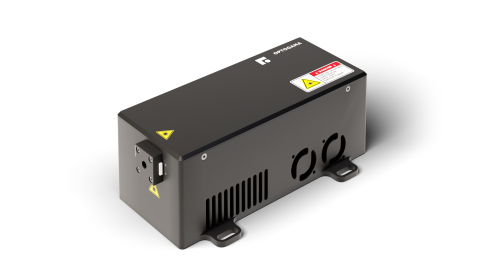
Nd:YAG passively q-switched DPSS lasers “WAVEGUARD”
Michael Iluz

Main features:
- Robust and compact design
- Internal and external TTL triggering
- Laser controller with USB or RS232 interface
- OEM version available
- Optional: adjustable pulse repetition rate
Application examples:
- Material processing & micromatching
- LIBS
- Marking
- LIDAR & Laser Ranging
- Biophotonics
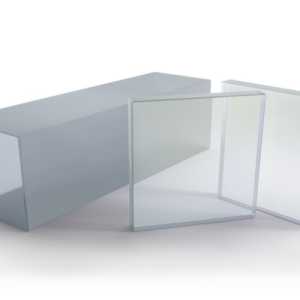
Nonlinear crystals
Michael Iluz
- BBO crystals
- LBO crystals
- KTP crystals
- KDP, DKDP crystals
- Lithium niobate crystals
- AgGaSe2 crystals
- AgGaS2 crystals
- ZnGeP2 crystals
- GaSe crystals
- CdSe crystals
- Solid state dye cell
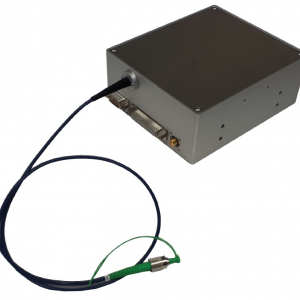
Nps – Narrowband ps lasers
Michael Milgram

Key Features:
- 1064.3 +- 0.1 nm
- 7ps
- spectral width <0.3nm
- 40MHz
- air-cooled and liquid-cooled version
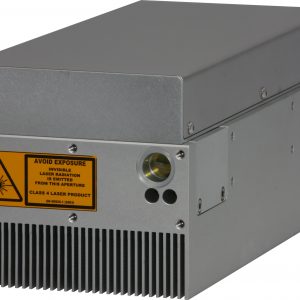
ONDA NS Q-SWITCHED DPSS LASER
Michael Milgram
Key Features:
- Up to 0.8mJ pulse energy
- @355nm @532nm @1064nm
- 2 to 10ns pulsewidth
- Single shot to 100kHz
- MOPA configurations
- Monolithic design
- Air cooling
- Low heat waste

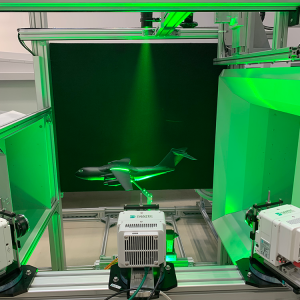
Particle Image Velocimetry (PIV)
Michael Iluz

KEY FEATURES:
- Non-intrusive technique
- Optical / imaging based principle
- Generates snapshots of flow fields
- Different measurement options (2 components in a plane, 3 components in a plane and 3 components in a volume)
- Versatile technique tailored to your needs (Planar PIV, results in 2D planes with U and V velocity components, Stereo PIV, results in 2D planes with U, V, and W velocity components and Volumetric velocimetry measures U, V, and W in a 3D volume)
- Large velocity range
- Large measurement domain range
- High spatial resolution
- High temporal resolution
- Correlation-based techniques
- Extensive post-processing
- One software platform with interfaces and export functions
- Pressure for PIV Add-on with different solvers